Hurricane Protection
Impact Windows vs Hurricane Shutters: Which Is Better for Florida Homes?
The Two Main Options for Hurricane Protection in Florida
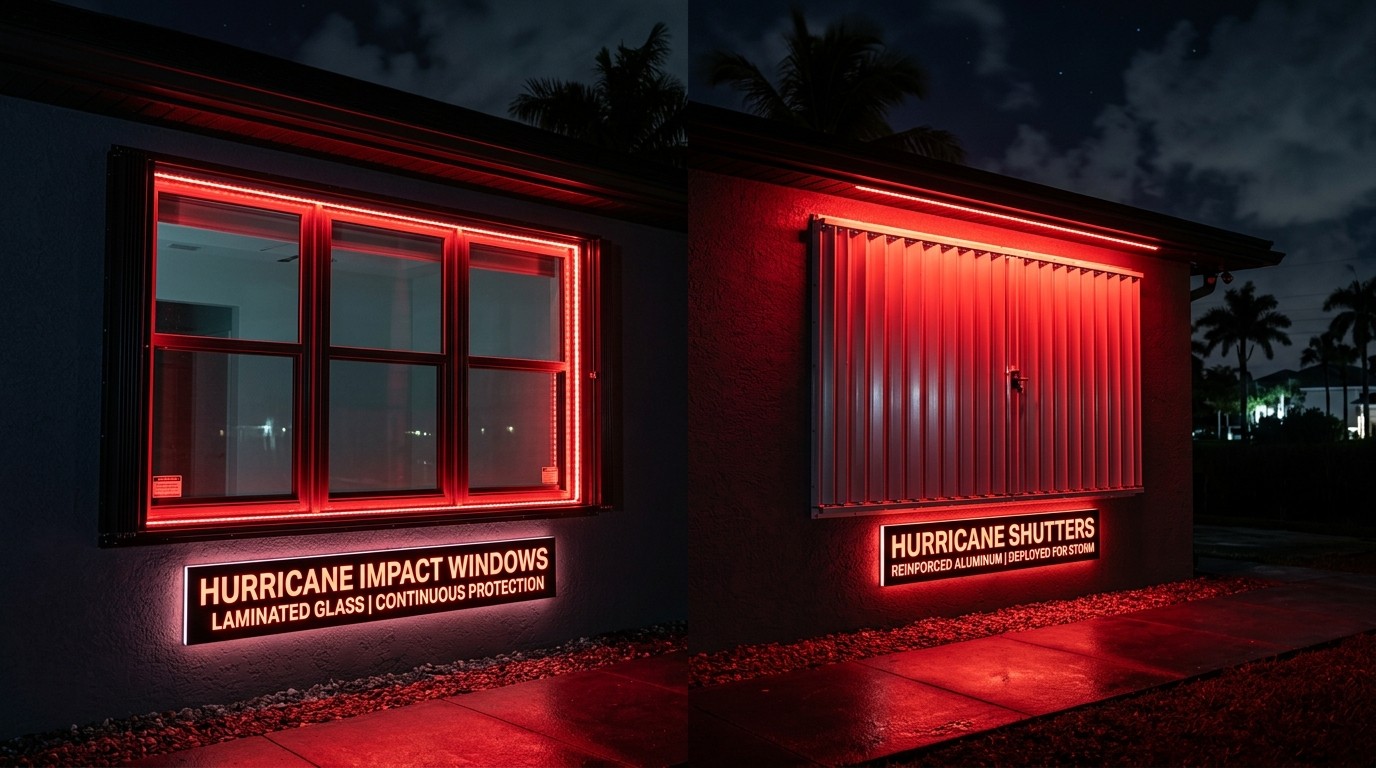
Florida homeowners have two primary choices for protecting their homes during hurricane season — impact windows or hurricane shutters. Both meet Florida building code requirements, but they differ significantly in convenience, daily benefits, and long-term value.
Hurricane Shutters - The Traditional Option
Accordion shutters, roll-down shutters, and removable panels have been the standard for decades. They cost less upfront and provide solid storm protection when deployed. However, they must be manually installed before every storm and removed after. Between storms, they provide zero benefit — no security, no UV protection, no noise reduction, no energy savings. They also require storage space and regular maintenance to prevent rust and jamming.
"The best hurricane protection is the kind you never have to think about. Impact windows work while you sleep, while you're on vacation, and while the storm is still 500 miles away."
Impact Windows — The Permanent Solution
24/7 hurricane protection with zero setup or maintenance
Break-in resistance that standard windows and shutters cannot match
Wind mitigation insurance discounts from most Florida carriers
Increased property value — Southwest Florida buyers expect impact windows
Which Should You Choose?
If you want the lowest upfront cost and only need storm protection during hurricane season, shutters work. If you want permanent protection, daily benefits, insurance savings, and increased home value, impact windows are the better long-term investment for any Southwest Florida homeowner.
Get Expert Advice
Not sure which option is right for your home? SW FL Impact Solutions helps homeowners across Naples, Fort Myers, Marco Island, and all of Collier and Lee County compare their options and make the right decision. Call (239) 692-3361 for a free in-home consultation — no pressure, no obligation.